
How to Implement Citizen Centric Governance at Scale
Hacking Humans Part 3
Bottom Line Up Front, I want to build a brand. Not my brand, a digital state government brand; in Mississippi it’s called ITS. I figure if I can teach you some basics of programming, AI, blockchain encryption, and architecting a trusted digital ecosystem, you may decide to join me. If you do, the buy-in is pretty cheap, a little trust, maybe a favor or two, and maybe a political favor down the road (aka passing a new state law).
Now when you start talking about money and politics, people tend to get squirrely which is fair. Afterall, I am an agent of the government. So let’s start with a little money and politics and then move into tech.
In my view, at the state government level (we operate as a passthrough in many cases from the Federal Government) the closest thing to money we have to trade for is time. Software is also a trade of time for money, either it makes things faster or it’s a digital activity that takes your time like a video game. If you’re paying for the service you want it to serve you, and if you are getting it for free it’s because someone wants to target you for advertising and they paid for it and gave you access to the platform.
My political philosophy is basically: “life is good, death is bad, the Declaration of Independence is our Vision Statement and the Constitution (plus all the other laws, regulations and SOPs) is our operating environment”. If you disagree with that then the rest of this won’t make any sense to you. Now, like any rule there may be exceptions but we want to program the rule not the edge case. So systemically I can speak in absolute terms while acknowledging the fact that people are weird and endlessly complex individuals. Statistically however, we sort of assume all populations have something close to a normal distribution curve with the majority of our population falling somewhere in the middle ground.
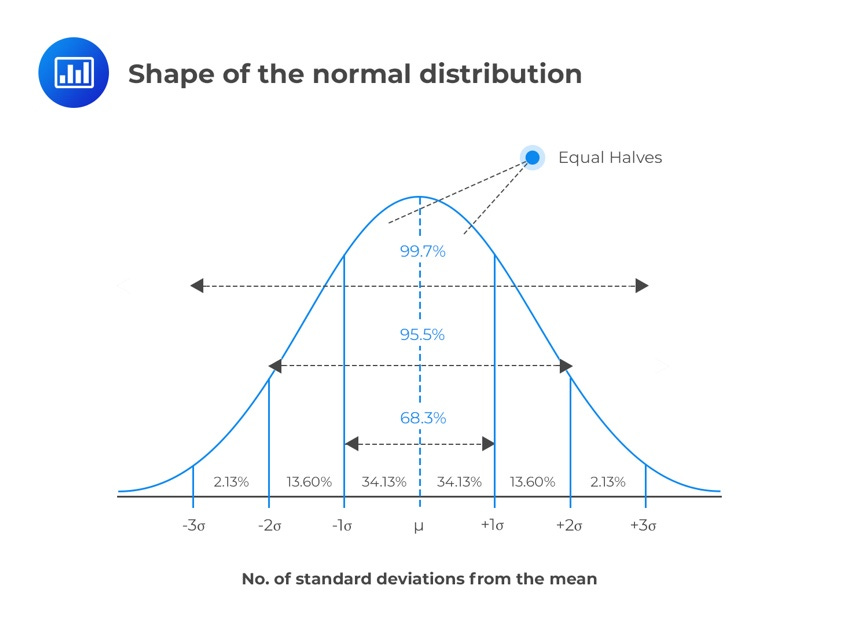
Statistics are important to programming when we get into AI but for now let’s just sort of assume that is accurate and if so; then we want to program digital government for as much of the 70-99% range as we can. So what is programming a computer exactly? First, you need to understand what a computer does, or rather what a Decision Support System (aka Software) does. It is a system composed of 0s and 1s. So if you know how a light switch works, you too can be a computer programmer.
There are four elements to a computer program. The Input (electricity at the switch itself, no power there and no light), the Process (switch up or down, the Output (light on or off), and a Decision (is the end state the desired one?). Input, process, output, decision. If the light is on and you wanted it off, switch the switch the other way. So in binary terms you could say 1 (power), 1 (switch up), 1 (light on), 1 (I like this)/0 (I don’t like this) OR 1 (power), 0 (switch off), 0 light off, 1 (I like this)/0 (I don’t like this). Those are the only two options possible physically; 1111 or 1000 assuming you have power in both cases and you’re happy with your light bulb’s final state. Input, process, output, decision.
A computer uses this same process it just does it really fast. Anything digital is a long series of decisions stored in 0s and 1s. Assuming you could write computer code and become a software programmer; then you basically have two options for constructing a software program. Keep in mind ALL programming languages end up stored as….. you guessed it 0s and 1s.
One is deterministic (I always get a 0 or 1 at the end because I wrote the program); in that method you write code to either read or write static data and weave it into a series of workflows. This is best demonstrated with Amazon’s shopping system; the program runs the same whether I’m logged into my account or you are logged into your account even though all of our data stored by Amazon is different. I sometimes think of this as like a game of 3 Card Monty, where the card moving is the program process. Data can only be read or modified and code can only be executed, so the number of card movements is the number of times the program runs. Or think of two digital snakes made up of 1s and 0s interacting with each other but one is the program (read only) and one is the data (modified). Congratulations, you are a programmer. Electricity is either a 0 or a 1 so ALL digital outputs of electricity are either a 0 or a 1. For the PM nerds, think of this as Waterfall programming. Agile was necessary because the systems we were building became too complex to model quickly, so it became better to break them up into small easier to automate chunks.
Ok so normal software is input, process, output, decision where the process is [Code First, Data Modified] and the output is on the screen waiting for you to make the next decision by pressing a button or typing on your keyboard. Those are the inputs and output of software because you are the only one who can decide what to do next. Keyboard/Mouse, Code, Data Modified, Screen – wait for human.
AI (which I guess is the brand we’re stuck with now) reverses the Code and the Data part. [Data First, Code Modified] means you will get a result that is always statistically less than 1 or greater than 0. It will be a probabilistic result (see normal distribution chart above). That’s why when you “doom loop” or “hype loop” AI stuff you kind of end up with Star Trek or Mad Max scenarios. Think of AI as a Pachinko machine of sorts, it can guess better than randomness obviously, but it’s still not a 0 or 1. These two digital snakes modify each other in various ways instead of one being the “Code – Read Only”. But it still uses electricity, so in order to make a decision we’re gonna need a human somewhere in that loop too, it just depends how critical the decision is.
If the AI code is used to determine say when to turn off the lights in a building, we can probably just let it guess when everyone has left with some percentage of certainty (glass half empty turn off lights, glass half full turn them on); worse case AI guesses wrong and someone has to stand up and trip a motion sensor or a switch; Agentic AI. We don’t want to let it decide to when and how to use force on our populace autonomously though because we don’t know the decision tree the led to that recommendation so we provide that information to a law enforcement officer who then makes a determination. LLM / Automated Alerting System. Use of government force is probably the most important function of state government after all.
So AI has two-ish (it’s still two at the binary level) structural use cases; both are very important to digital government, one AI can be used to “program” a system so you don’t have to pay someone like me to do it, or it can be used to answer a question by a constituent (LLM) or alert a human employee (AAS).
Our state government rulebook is already written, they are called laws right? We are not allowed to knowingly do things as government employees that violate the law. This is profoundly important and useful for AI because this saves a lot of time and therefore taxpayer money by allowing our SME’s to build programs. The other use case is smart alerting, this is the idea that based on all the sensors, experts in government, telemetry, and our knowledge of the state’s population based on the data that we have, a digital brand could (with your explicit permission) proactively alert you to something important like a hurricane, or power outage, or disease outbreak, etc. Think of it as highly targeted government spam. But if you trust that process then this opted-in “official digital government brand” spam is statistically useful information for you. The trick is keeping the human you separate from your “meta-data”, or your demographic, health, criminal, etc data. We do this by de-identifying it.
“Blockchain”, or Crypto is a form of encryption that uses these same four concepts but applies it to a transaction log that is based on an input no one knows (the secret) that is uneditable and therefore secure enough to use for sensitive things like money. Because it is a one way street (the encrypted 1s and 0s are just stacking up after each transaction) you can’t reset your password. Even writing the code to facilitate that would break the entire thing. No recovery, no backdoors. This is useful because of a concept called non-repudiation. Keep in mind this isn’t an exhaustive implementation plan, that’s what IT Security is for.
Basically it means each state could issue a DigitalID that is electronically tied to your Drivers License or physical StateID. If you forgot your password however, you have to go to the DMV or other physical office with your ID and get a new DigitalID issued to you (the old one simply gets locked out). Not the end of the world, but annoying for sure. But the upside would be that you could choose to link these two items and therefore participate in a Digital Government System to request goods and services and ask permission when necessary for things like building permits. Again, all voluntary; this would be Government as a Service. But if all of our state agencies used AI to digitize their internal processes, then some of these use cases become pretty valuable.
So let’s just say that you wanted to partner with your state government to make this happen? You would need to bring in some tools that you may not have. Generally those tools fall into four categories; Enterprise Service Management (aka the Favor Economy), for that one I prefer Freshworks personally, a Document Management System (Docusign), a CI/CD tool (GitLab for me), and at least one cloud provider like AWS, Azure, or Google (I am brand agnostic because ITS has combined all three which I think it the best approach). If you wanted to add in AI for process mapping (Celonis) then you can do this faster, much faster. But Freshworks and GitLab have native AI tools for software development and highly targeted favor trading and tracking. Tell them Kane sent ya; or not doesn’t really affect me personally. But they can better tailor their solutions to your agency if they know you are following the same path as ITS.
Ok, so here’s a flow diagram of how I visualize this working (assuming that you’ve got a secure DigitalID and you trust your state’s digital brand, which I think you should provided they build it in the manner I’ve described above). Quantum computing might mess with this by cracking Blockchain, but then we’d also have quantum encryption so it would be as future proof as anything else out there.
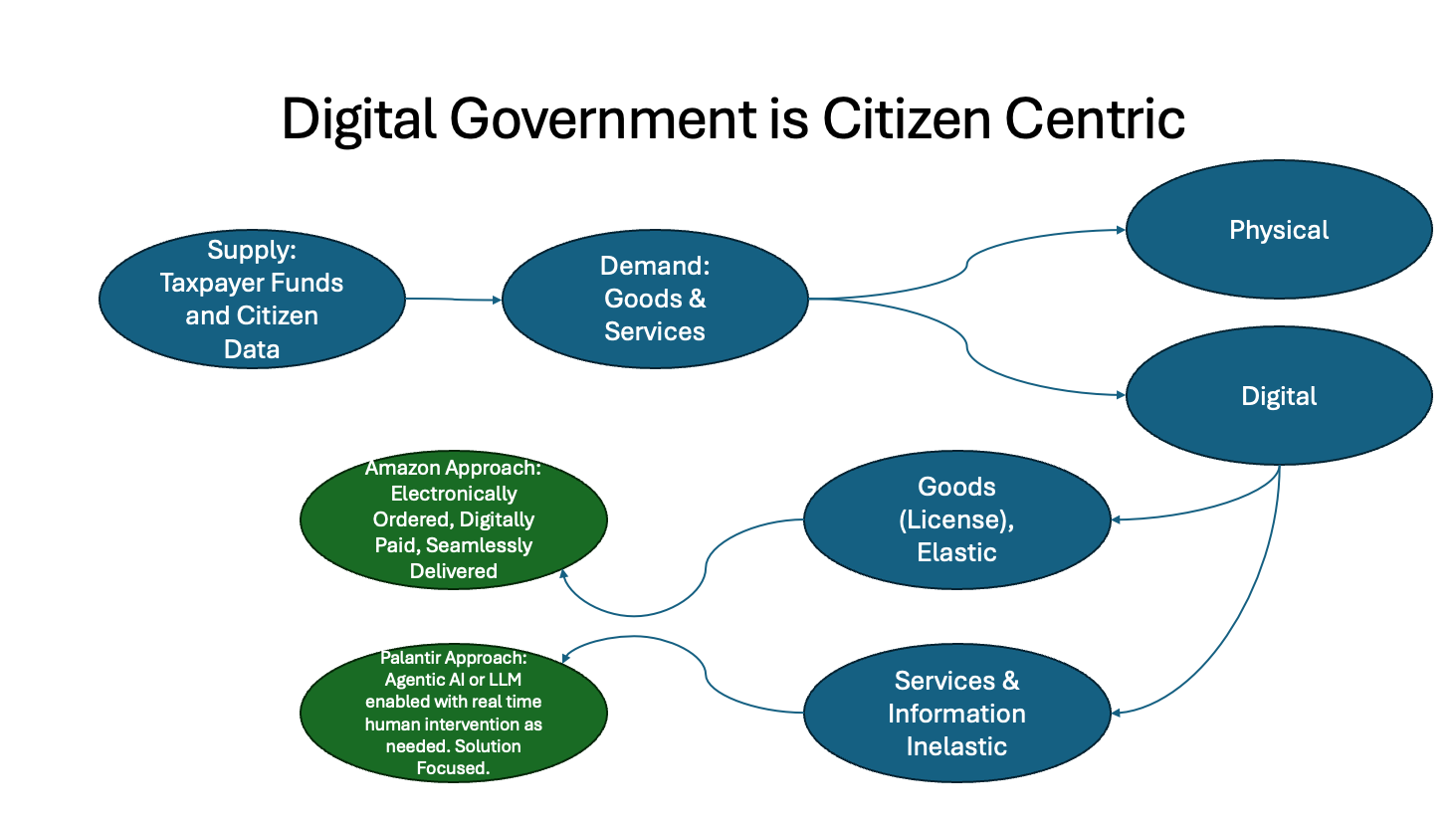
This slide is from a presentation I did around architecting this for the state of Mississippi last month. It’s an hour long, but in the presentation I try to walk how our agency is modernizing itself around these principles. Link here.
I think most people can agree that if I need to trade my money (tax or fee for service) for a government good or service and have that result delivered to me, I’d like it to look a lot more like Amazon than the DMV. Palantir is less well known outside of military and law enforcement, but the idea would be if you opted in to state government sponsored alerts, then government agencies could send you messages based on the conditions you set for it plus your meta-data. So if there’s a car fire on your route home and the interstate is closed, or a hurricane is coming to your town etc.; a text, email, and/or an app on your phone could notify you about it. Useful, but you’re trading your data for it. The good news is we have tons of data protection laws so we won’t be selling it to a marketing company.
The trade though gives our citizens something else of benefit in GaaS, complete transparency of their government’s activities around our demands. When you request a building permit, business license, health inspection, grant, WIC, etc you would see that process’s steps, where your request is in the journey from demand to supply, and statistically how long it will take to be fulfilled. For everything, in one place, under one digital brand.
You could even set up a dashboard where everyone with an official DigitalID gets to electronically “vote” on an issue they care about and display that KPI to the legislature in real time. It doesn’t change how politics works, but it would provide for an additional data point before an elected official votes yes or no to a piece of legislation. Rather than waiting for a survey company to conduct one, or an election to occur before you can give your opinion to the actual people who need to hear it. It speeds up the feedback loop, in some cases by years. This feedback loop would be de-identified because of that Blockchain thing, we know all the votes are definitely humans that are citizens of our state but you can’t reverse the surveillance to figure out specifically that Kane Tomlin wanted you to vote yes or no to a particular law.
So that’s the system of government once it’s digital as I envision it. The good news is once again Mississippi is taking the lead and other states are envisioning a system like this too right now, if you watch that video Nvidia stated North Carolina is also looking to implement something like this, so that political favor might be as simple and asking your representative to pass a law stating “all agencies must work towards a secure, de-identified single system of record for all services they provide under the authority of [insert your digital brand here].” I’m not a lawyer so that last part might need some tweaking.
Alright, so let’s get moving on this and if you’ve been around this Substack since the beginning, once a few states get there, we go hack humanity for charity.
Fully agree on the approach - a layered Ai-system architecture has the ability to both simultaneously centralize information sharing (essentially the default is to share data through governed APIs) and decentralize decision-making (providing the data and models at the point of need) that empowers individuals (enhanced human security) and enables effectiveness/efficiency incentives for governments to provide services at the right level. One major drawback to this is by centralizing, you also could enable nefarious actors with the ability to "control" populations - we already know the power of social media to influence human actions because the incentives for monetary gain are there (thanks, Meta, Google, etc.). But I think the positives outweigh the negatives here, and as we get closer to AGI, we need to find ways to leverage the technology to reinforce our better angels and mitigate our human biases so that we enable the majesty of our founding documents to be realized by all.